

Testing Built Into Every Release
We build testing into the way software gets written. Developers own unit quality, QA engineers own test strategy and automation runs everything in between.
Automated Testing · Release Validation · India · Ireland · USA
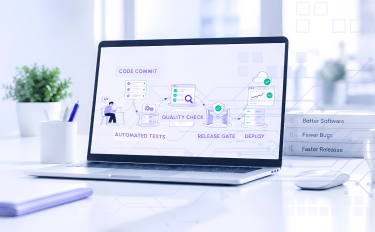

A Bug Found Early Costs a Fraction of One Found Late
At Collatzinc, we treat quality engineering as an ongoing discipline rather than a final hurdle. We link developer-owned unit tests, QA-led design, manual exploratory testing and automated regression suites into a single cohesive system across every release.
Most teams don't catch bugs late because they lack effort; they catch them late because testing is treated as a single checkpoint at the end of the line. When a tester only sees a feature once it's finished, they inherit every shortcut and unchecked assumption made along the way.
We shift that Responsibility to the Whole Team
- Developers write tests as they build. QA Engineers design test cases before code is written. Automated Pipelines run continuous checks on every commit.
- By the time a release hits production, it has already cleared multiple layers of validation, with each layer owned and backed by the right people at the right time.
 What Happens When Testing Is an Afterthought

Bugs reach production:
Manual testing catches what it can, but regressions slip through. Hotfixes pile up and the team spends more time firefighting than building.

Releases slow down:
Without automated validation, every deployment feels risky. Teams delay releases and stack up changes, making each push bigger and harder to trust.

Confidence erodes:
When nobody trusts the release process, shipping gets stressful. Developers hesitate, stakeholders lose patience and velocity stalls.
Release Stability
Testing Layers
Dual Validation
Skipped Checks

What We Build

Quality Engineered In, Not Tested After
Most software teams rely on manual testing that fails to scale or total test automation that misses critical usability issues. We balance automated testing and manual QA checks across the development lifecycle so every layer catches what it does best.

Define Test Cases
QA engineers write detailed test cases based on user acceptance criteria while features are in development. This approach builds software quality from day one rather than patching bugs after launch.
Automate and Integrate
Unit tests, automated regression suites, smoke testing, and end-to-end user journeys connect directly into your CI/CD pipeline. These automated checks run on every code commit and deployment without manual intervention.
Validate and Release
A production release only moves forward after passing automated tests and receiving manual QA sign-off. Every software build passes through the exact same quality gate, ensuring reliable software delivery every time.


What This Looks Like on an Active Engagement
On a typical engagement, this plays out as a layered system rather than a single testing phase near the end.
Code runs through linting and static analysis the moment it is written, catching syntax issues before a reviewer sees it. Developers pair each feature with unit and component tests to check functions and UI components in isolation. QA engineers work alongside them, building test cases tied to acceptance criteria while work is underway.
Once a feature is ready, QA engineers step in with exploratory testing to catch the usability issues and edge cases a script would miss. Anything they find becomes a permanent test in the automated suite, expanding the coverage for future releases.
Finally, automated end to end tests validate full user journeys, performance checks confirm the system holds up under traffic and a release gate runs the complete suite one last time before production.
Developers own unit level quality, QA engineers own test strategy and manual validation, while automation handles everything repeatable.

Built on the Tools That Scale
Every layer of our stack catches specific failure points before they reach your users, validating code automatically on every commit.
 Linting and Static Analysis
Style violations and syntax errors slip into merge requests unnoticed
ESLint and Prettier run locally as developers write code and again inside the CI/CD pipeline
 Unit and Component Testing
Component level bugs surface late, making them expensive to trace after integration
Jest, Vitest, React Testing Library and JUnit validate functions and components in isolation
 AI Assisted Testing
Writing manual test scripts slows down how fast regression coverage can grow
AI generates test cases and scripts, which QA engineers review before integration
 End to End Automation
Individual components pass their tests, but complete user journeys still break
Playwright and Appium run full user journeys automatically across browsers and devices
 Performance and Load Testing
Systems pass functional tests but buckle under real world traffic
JMeter validates traffic and load handling before release, not after a spike exposes the gap
 CI/CD Integration
Tests exist but fail to run consistently without a manual trigger
Test suites trigger automatically on every commit, merge and deployment across the pipelines we manage
The applications we test are built by our Custom ERP and Web App Development and Mobile App Development teams.

The Layered System Behind Every Release We Ship
Defects cost less: Catching a bug in a unit test costs a fraction of fixing one in production. Embedded quality engineering shifts that cost curve left.
Products improve with every sprint: Growing test libraries and regression suites make your application more stable over time, not more fragile.
Releases get faster: When developers test as they build and QA validates in parallel, releases move quickly with less risk instead of stacking up at sprint end.
Teams build instead of firefight: When developers own unit quality and QA owns strategy, everyone focuses on moving the product forward instead of chasing bugs.
Builder's Insight
View Our WorkEvery project we ship carries this exact layered system. Developers own unit tests, QA owns strategy and manual validation, while automation handles repetitive checks at scale. Nothing slips through the gaps.
Collatzinc Engineering Team
View Our Work
From First Commit to Release Gate
Every build moves through the same four stages, with testing owned at each one.
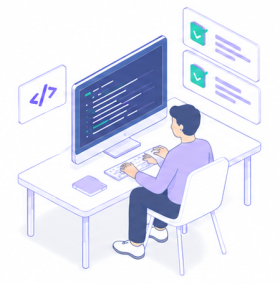
Development
Code and unit tests get written together. A feature counts as done once its own tests pass.
99.9% Release Confidence

QA Validation
Test cases get designed against acceptance criteria. Manual and exploratory testing covers what a script cannot.
Testing Layers Working Together
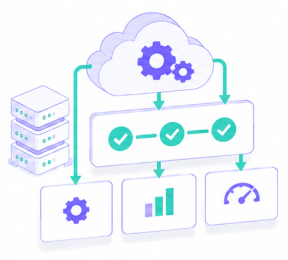
Automation
End-to-end tests, regression suites and performance checks run automatically on every commit and merge.
Automated and Manual Validation
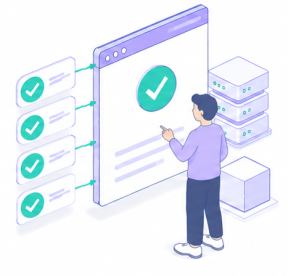
Release Gate
The full suite runs one last time before anything reaches production. No release goes out on a manual say-so.
Zero Manual Release Steps

Related Services

Custom ERP and Web Application Development
We build the web platforms and admin systems backend infrastructure powering your connected devices.

Mobile App Development
Cross platform mobile testing with Appium keeps iOS and Android builds release ready on every device.

AI and Data Intelligence
Model validation, data pipeline testing and output verification for AI powered systems that need to be right every time.

eCommerce Solutions
Checkout, payment and catalogue flows get load tested well before a real sale depends on them.